Discover more about MET biomarkers in NSCLC

MET biomarkers can be key drivers of oncogene addiction and can lead to growth and progression of NSCLC.1,2

NSCLC=non-small cell lung cancer.
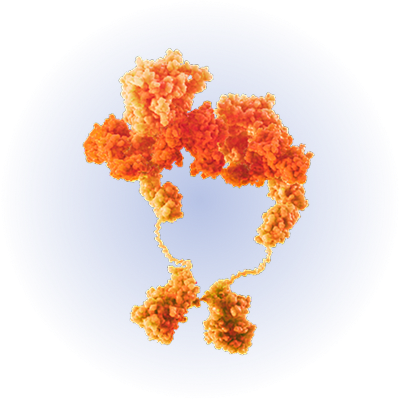
The MET gene encodes the c‑Met (also known as MET or HGFR) protein, a receptor tyrosine kinase: A protein that influences cell growth, survival, and migration when activated by its ligand, HGF.3–6
In NSCLC, HGF/MET signaling can be dysregulated through various aberrations associated with the receptor, including:
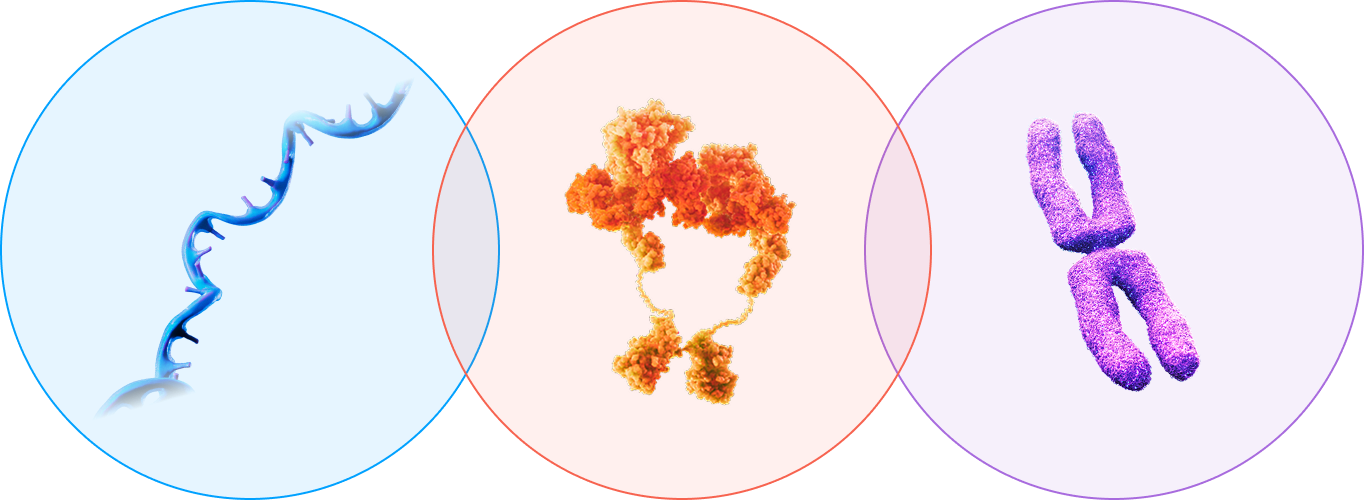
MET Exon 14 Skipping Mutations
Detection Method:
NGS
Increased c‑Met Protein Expression
Detection Method:
IHC
MET Focal Gene Amplification
Detection Method:
FISH, NGS
MET focal gene amplification is an emerging biomarker.
FISH=fluorescence in situ hybridization; HGF=hepatocyte growth factor; IHC=immunohistochemistry; NGS=next-generation sequencing; NSCLC=non-small cell lung cancer.
The MET biomarkers—MET exon 14 skipping mutations, increased c‑Met protein expression, and MET focal gene amplification—are not mutually exclusive and can overlap.15
METex14 skipping mutations and ​MET focal gene amplification do not co-occur in a majority of NSCLC cases7​
Reported overlaps with increased c‑Met protein expression vary widely (~10–85%) and are highly dependent on:10,16–18​
• Detection methods
• Detection level(s)
• Study population
This image is for illustrative purposes only. Depictions do not represent relative population sizes nor degree of biomarker overlap.
ex14=exon 14; FISH=fluorescence in situ hybridization; NGS=next-generation sequencing; NSCLC=non-small cell lung cancer.
Each MET biomarker may exhibit its own pattern of overlap with other known NSCLC biomarkers.
MET Exon 14 Skipping Mutations
Increased c‑Met Protein Expression
MET Focal Gene Amplification
Mutual Exclusivity:
  • Often occur independently of other oncogenic drivers, indicating distinct pathways7
Resistance Mechanism:
  • Linked to EGFR or ALK mutations as a mechanism of resistance against targeted therapies20​
Resistance Mechanism:
  • At higher MET copy numbers, when paired with mutations like EGFR or ALK, it may act as a resistance mechanism against targeted therapy15​
Co-occurrence Rarity:
  • Mutually exclusive with EGFR, KRAS, BRAF, ALK, or ROS1 mutations19​
Independence & Correlation:
  • Also occurs without other oncogenic drivers and has been correlated with PD-L1 expression in NSCLC21​
Common Co-occurrence:
  • Frequently co-occurs with other oncogenic drivers when present at lower copy numbers21​
Protein expression and gene copy level(s) set during IHC, FISH, and NGS evaluation affects observed overlap with other NSCLC biomarkers17
Each MET aberration may exhibit its own pattern of overlap with other known NSCLC biomarkers.
MET Exon 14 Skipping Mutations
Mutual Exclusivity:
  • Often occur independently of other oncogenic drivers, indicating distinct pathways7
Co-occurrence Rarity:
  • Mutually exclusive with EGFR, KRAS, BRAF, ALK, or ROS1 mutations19​
Increased c‑Met Protein Expression
Resistance Mechanism:
  • Linked to EGFR or ALK mutations as a mechanism of resistance against targeted therapies20
Independence & Correlation:
  • Also occurs without other oncogenic drivers and has been correlated with PD-L1 expression in NSCLC21​
MET Focal Gene Amplification
Resistance Mechanism:
  • At higher MET copy numbers, when paired with mutations like EGFR or ALK, it may act as a resistance mechanism against targeted therapy15​
Common Co-occurrence:
  • Frequently co-occurs with other oncogenic drivers when present at lower copy numbers21​
Protein expression and gene copy level(s) set during IHC, FISH, and NGS evaluation affects observed overlap with other NSCLC biomarkers17
ALK=anaplastic lymphoma kinase; BRAF=B-raf proto-oncogene, serine/threonine kinase; EGFR=epidermal growth factor receptor; ex14=exon 14; IHC=immunohistochemistry; KRAS=Kirsten rat sarcoma viral oncogene homolog; NSCLC=non-small cell lung cancer; PD-L1=programmed death-ligand 1; ROS1=ROS proto-oncogene 1, receptor tyrosine kinase.
Relevant Resources
TAP TO DOWNLOAD
References
1. Remon J, Hendriks LEL, Mountzios G, et al. J Thorac Oncol. 2023;18(4):419-435. doi:10.1016/j.jtho.2022.10.015. 2. Han Y, Yu Y, Miao D, et al. JTO Clin Res Rep. 2024;5(2):100630. doi:10.1016/j.jtocrr.2023.100630. 3. Altintas DM, Comoglio PM. Cancers (Basel). 2023;15(18):4672. doi:10.3390/cancers15184672. 4. Liang H, Wang M. Onco Targets Ther. 2020;13:2491-2510. doi:10.2147/OTT.S231257. 5. Park S, Choi YL, Sung CO, et al. Histol Histopathol. 2012;27(2):197-207. doi:10.14670/HH-27.197. 6. Sun W, Song L, Ai T, et al. J Biomed Res. 2013;27(3):220-230. doi:10.7555/JBR.27.20130004. 7. Socinski MA, Pennell NA, Davies KD. JCO Precis Oncol. 2021;5:PO.20.00516. doi:10.1200/PO.20.00516. 8. Drusbosky LM, Dawar R, Rodriguez E, Ikpeazu CV. J Hematol Oncol. 2021;14(1)129. doi:10.1186/s13045-021-01138-7. 9. Sierra JR, Tsao MS. Ther Adv Med Oncol. 2011;3(1 Suppl):S21-35. doi:10.1177/1758834011422557. 10. Yin W, Guo M, Tang Z, et al. Cancers (Basel). 2022;14(10):2433. doi:10.3390/cancers14102433. 11. Spagnolo CC, Ciappina G, Giovanetti E, et al. Int J Mol Sci. 2023;24(12):10119. doi:10.3390/ijms241210119. 12. Ding C, Qiu Y, Zhang J, et al. BMC Pulm Med. 2023;23(1):240. doi:10.1186/s12890-023-02482-9. 13. Coleman N, Hong L, Zhang J, et al. ESMO Open. 2021;6(6):100319. doi:10.1016/j.esmoop.2021.100319. 14. Settleman J. Curr Biol. 2012;22(2):R43-4. doi:10.1016/j.cub.2011.11.004. 15. Qin K, Hong L, Zhang J, et al. Cancers (Basel). 2023;15(3):612. doi:10.3390/cancers15030612. 16. Hartmaier RJ, Markovets AA, Ahn MJ, et al. Cancer Discov. 2023;13(1):98-113. doi:10.1158/2159-8290.CD-22-0586. 17. Xiang C, Lv X, Chen K, et al. Mod Pathol. 2024;37(4):100451. doi:10.1016/j.modpat.2024.100451. 18. Heydt C, Ihle MA, Merkelbach-Bruse S. Cancers (Basel). 2023;15(11):2932. doi:10.3390/cancers15112932. 19. Mazieres J, Vioix H, Pfeiffer BM, et al. Clin Lung Cancer. 2023;24(6):483-497. doi:10.1016/j.cllc.2023.06.008. 20. Reischmann N, Schmelas C, Molina-Vila MA, et al. iScience. 2023;26(7);107006. doi:10.1016/j.isci.2023.107006. 21. Friedlaender A, Drilon A, Banna GL, et al. Cancer. 2020;26(22):4826-4837. doi:10.1002/cncr.33159.

    References
    1. Remon J, Hendriks LEL, Mountzios G, et al. J Thorac Oncol. 2023;18(4):419-435. doi:10.1016/j.jtho.2022.10.015.
    2. Han Y, Yu Y, Miao D, et al. JTO Clin Res Rep. 2024;5(2):100630. doi:10.1016/j.jtocrr.2023.100630.
    3. Altintas DM, Comoglio PM. Cancers (Basel). 2023;15(18):4672. doi:10.3390/cancers15184672.
    4. Liang H, Wang M. Onco Targets Ther. 2020;13:2491-2510. doi:10.2147/OTT.S231257.
    5. Park S, Choi YL, Sung CO, et al. Histol Histopathol. 2012;27(2):197-207. doi:10.14670/HH-27.197.
    6. Sun W, Song L, Ai T, et al. J Biomed Res. 2013;27(3):220-230. doi:10.7555/JBR.27.20130004.
    7. Socinski MA, Pennell NA, Davies KD. JCO Precis Oncol. 2021;5:PO.20.00516. doi:10.1200/PO.20.00516.
    8. Drusbosky LM, Dawar R, Rodriguez E, Ikpeazu CV. J Hematol Oncol. 2021;14(1)129. doi:10.1186/s13045-021-01138-7.
    9. Sierra JR, Tsao MS. Ther Adv Med Oncol. 2011;3(1 Suppl):S21-35. doi:10.1177/1758834011422557.
    10. Yin W, Guo M, Tang Z, et al. Cancers (Basel). 2022;14(10):2433. doi:10.3390/cancers14102433.
    11. Spagnolo CC, Ciappina G, Giovanetti E, et al. Int J Mol Sci. 2023;24(12):10119. doi:10.3390/ijms241210119
    12. Ding C, Qiu Y, Zhang J, et al. BMC Pulm Med. 2023;23(1):240. doi:10.1186/s12890-023-02482-9.
    13. Coleman N, Hong L, Zhang J, et al. ESMO Open. 2021;6(6):100319. doi:10.1016/j.esmoop.2021.100319.
    14. Settleman J. Curr Biol. 2012;22(2):R43-4. doi:10.1016/j.cub.2011.11.004.
    15. Qin K, Hong L, Zhang J, et al. Cancers (Basel). 2023;15(3):612. doi:10.3390/cancers15030612.
    16. Hartmaier RJ, Markovets AA, Ahn MJ, et al. Cancer Discov. 2023;13(1):98-113. doi:10.1158/2159-8290.CD-22-0586.
    17. Xiang C, Lv X, Chen K, et al. Mod Pathol. 2024;37(4):100451. doi:10.1016/j.modpat.2024.100451.
    18. Heydt C, Ihle MA, Merkelbach-Bruse S. Cancers (Basel). 2023;15(11):2932. doi:10.3390/cancers15112932.
    19. Mazieres J, Vioix H, Pfeiffer BM, et al. Clin Lung Cancer. 2023;24(6):483-497. doi:10.1016/j.cllc.2023.06.008.
    20. Reischmann N, Schmelas C, Molina-Vila MA, et al. iScience. 2023;26(7);107006. doi:10.1016/j.isci.2023.107006.
    21. Friedlaender A, Drilon A, Banna GL, et al. Cancer. 2020;26(22):4826-4837. doi:10.1002/cncr.33159.
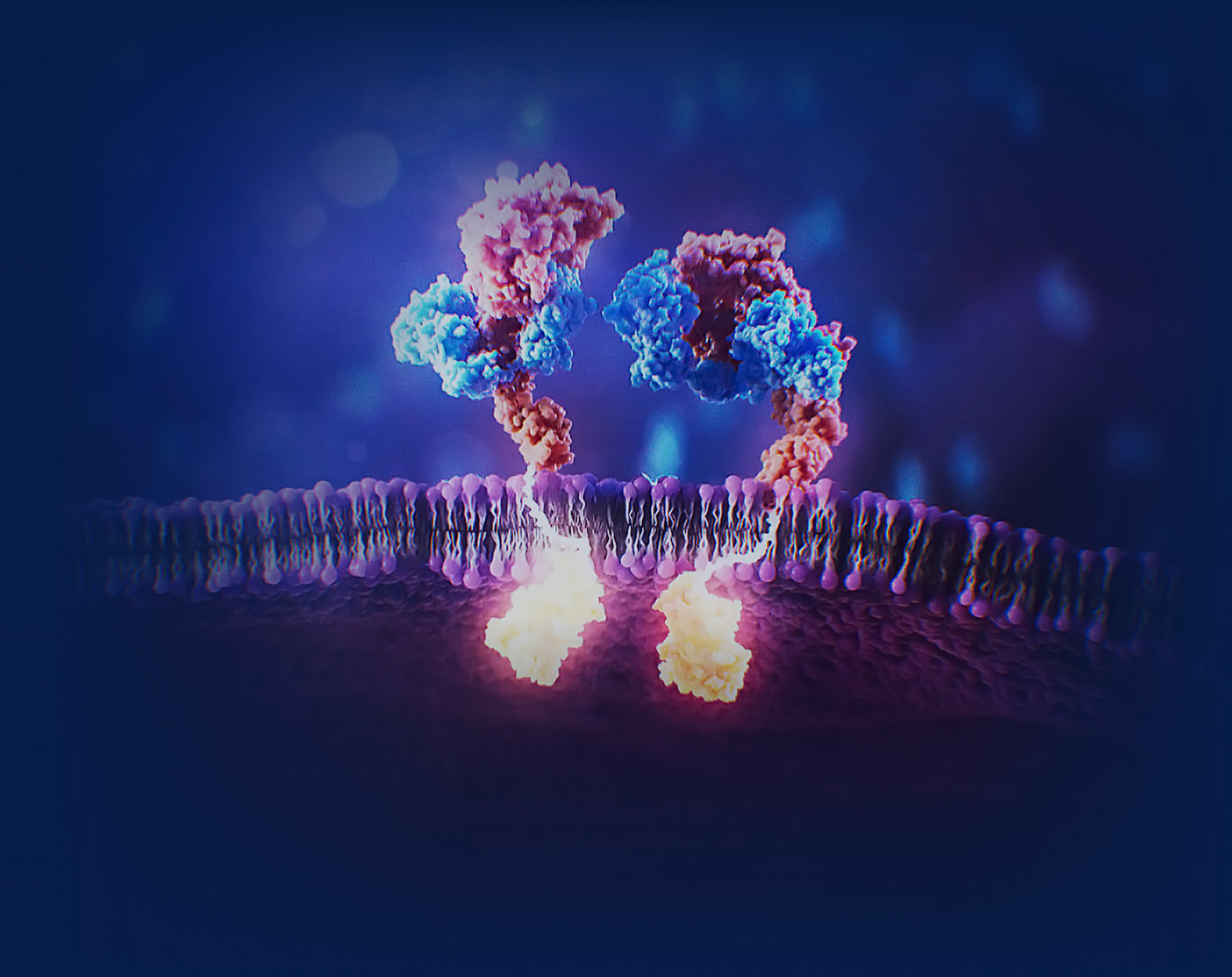
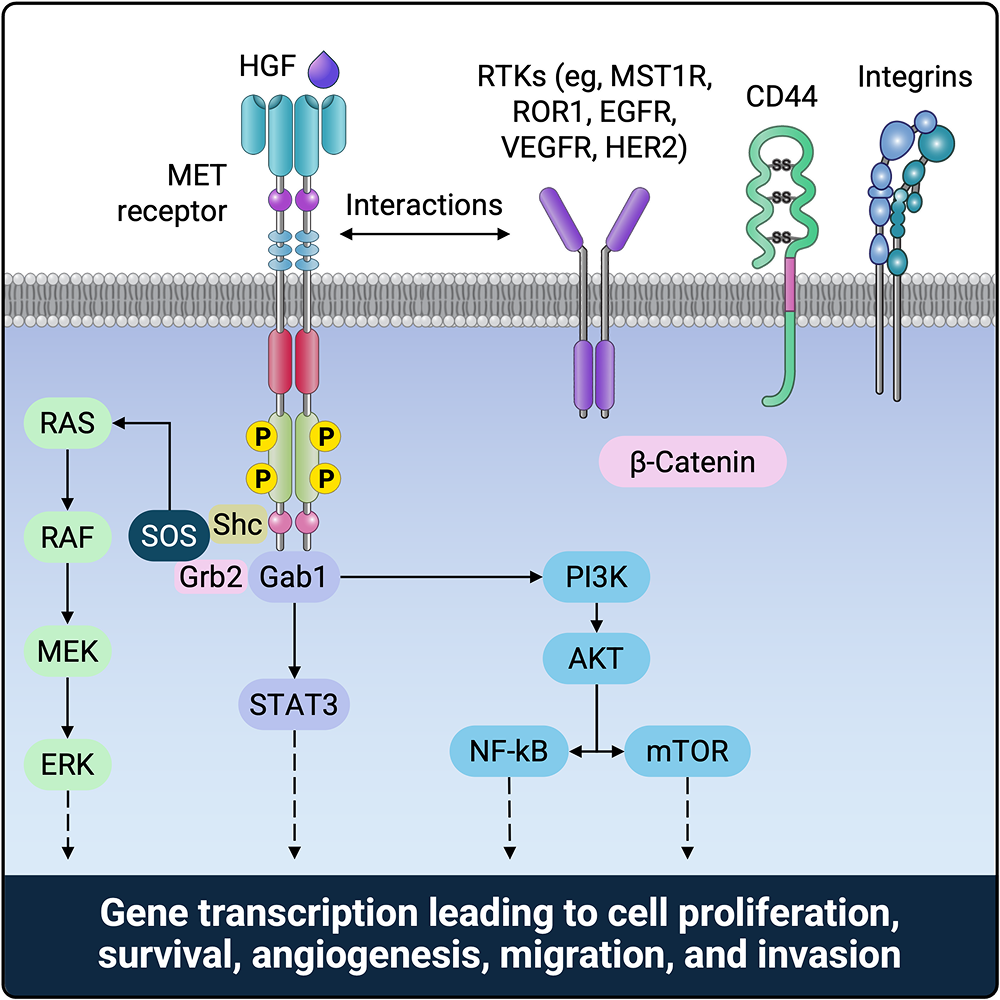
    Image adapted from Spitaleri G, et al. Cancers (Basel). 2023;15(19):4779.
    HGF/MET Signaling Pathway
    The HGF/MET pathway plays an important role in various vital cell processes, including embryonic development, tissue repair, carcinogenesis, and tumor progression. It can also interact with other ligands or cellular receptors.
    AKT=protein kinase B (or PKB); BRAF=serine/threonine protein kinase B-Raf (v-Raf murine sarcoma viral oncogene homolog B); CD44=cluster of differentiation 44; EGFR=epidermal growth factor receptor; ERK=extracellular signal-regulated kinase; Gab1=GRB2-associated-binding protein 1; Grb2=growth factor receptor-bound protein 2; HER2=human epidermal growth factor receptor 2; HGF=hepatocyte growth factor; HGFR=hepatocyte growth factor receptor; MEK=mitogen-activated protein kinase kinase; MST1R=macrophage-stimulating protein receptor 1; mTOR=mammalian target of rapamycin; NFκB=nuclear factor kappa-light-chain-enhancer of activated B cells; P=phosphate; PI3K=phosphatidylinositol 3-kinases; RAF=rapidly accelerated fibrosarcoma; RAS=rat sarcoma virus protein; ROR1=receptor tyrosine kinase-like orphan receptor 1; RTK=receptor tyrosine kinase; Shc=Src homology 2 domain-containing (adaptor protein); SOS=son of sevenless protein (or guanine nucleotide exchange factor); STAT3=signal transducer and activator of transcription 3; VEGFR=vascular endothelial growth factor.
    HGF/MET Signaling Pathway
    Image adapted from Spitaleri G, et al. Cancers (Basel). 2023;15(19):4779.
    The HGF/MET pathway plays an important role in various vital cell processes, including embryonic development, tissue repair, carcinogenesis, and tumor progression. It can also interact with other ligands or cellular receptors.
    AKT=protein kinase B (or PKB); BRAF=serine/threonine protein kinase B-Raf (v-Raf murine sarcoma viral oncogene homolog B); CD44=cluster of differentiation 44; EGFR=epidermal growth factor receptor; ERK=extracellular signal-regulated kinase; Gab1=GRB2-associated-binding protein 1; Grb2=growth factor receptor-bound protein 2; HER2=human epidermal growth factor receptor 2; HGF=hepatocyte growth factor; HGFR=hepatocyte growth factor receptor; MEK=mitogen-activated protein kinase kinase; MST1R=macrophage-stimulating protein receptor 1; mTOR=mammalian target of rapamycin; NFκB=nuclear factor kappa-light-chain-enhancer of activated B cells; P=phosphate; PI3K=phosphatidylinositol 3-kinases; RAF=rapidly accelerated fibrosarcoma; RAS=rat sarcoma virus protein; ROR1=receptor tyrosine kinase-like orphan receptor 1; RTK=receptor tyrosine kinase; Shc=Src homology 2 domain-containing (adaptor protein); SOS=son of sevenless protein (or guanine nucleotide exchange factor); STAT3=signal transducer and activator of transcription 3; VEGFR=vascular endothelial growth factor.
    MET Exon 14 Skipping Mutations (METex14 skipping)
    • Caused by genetic alterations, primarily point mutations or insertions/deletions (indels)7​
      • Can result in disrupted splicing during mRNA transcription, truncating the c-Met protein to omit its regulatory domain, which may increase stability and signaling and drive uncontrolled cell growth8
    • Typically identified via genetic sequencing, including DNA and RNA next-generation sequencing (NGS) methods7
    MET Exon 14 Skipping Mutations (METex14 skipping)
    • Caused by genetic alterations, primarily point mutations or insertions/deletions (indels)7​
      • Can result in disrupted splicing during mRNA transcription, truncating the c-Met protein to omit its regulatory domain, which may increase stability and signaling and drive uncontrolled cell growth8
    • Typically identified via genetic sequencing, including DNA and RNA next-generation sequencing (NGS) methods7
    Increased c-Met Protein Expression
    • Refers to elevated levels of the c-Met receptor on the surface of tumor cells compared to normal cells9​
      • Can be due to epigenetic, transcriptional, and post-transcriptional factors that can lead to enhanced signaling, promoting cell proliferation and tumor growth9,10
      • The most common reason for increased c-Met protein expression is transcriptional upregulation in the absence of a MET gene alteration11
    • Study has suggested that ~10% of lung adenocarcinomas have an absence (0+) of c-Met protein expression10
    • Measured via immunohistochemistry (IHC) staining intensity of tumor cells12
    Increased c-Met Protein Expression
    • Refers to elevated levels of the c-Met receptor on the surface of tumor cells compared to normal cells9​
      • Can be due to epigenetic, transcriptional, and post-transcriptional factors that can lead to enhanced signaling, promoting cell proliferation and tumor growth9,10
      • The most common reason for increased c-Met protein expression is transcriptional upregulation in the absence of a MET gene alteration11
    • Study has suggested that ~10% of lung adenocarcinomas have an absence (0+) of c-Met protein expression10
    • Measured via immunohistochemistry (IHC) staining intensity of tumor cells12
    MET Focal Gene Amplification (MET Amp)
    • Refers to specific increase in MET gene copies without an accompanying rise in chromosome 7 copies and is a primary cause for oncogene addiction, the dependency of cancer cells on specific oncogenes for survival and growth13,14
    • Can be detected via:13,15
      • Fluorescence in situ hybridization (FISH) using MET:CEP7 ratio
      • DNA and RNA next-generation sequencing (NGS) methods to assess gain in MET copy number
    MET focal gene amplification is an emerging biomarker.
    CEP7=centromeric portion of chromosome 7.
    MET Focal Gene Amplification (MET Amp)
    • Refers to specific increase in MET gene copies without an accompanying rise in chromosome 7 copies and is a primary cause for oncogene addiction, the dependency of cancer cells on specific oncogenes for survival and growth13,14
    • Can be detected via:13,15
      • Fluorescence in situ hybridization (FISH) using MET:CEP7 ratio
      • DNA and RNA next-generation sequencing (NGS) methods to assess gain in MET copy number
    MET focal gene amplification is an emerging biomarker.
    CEP7=centromeric portion of chromosome 7.
    Welcome to DISCOVER MET

    This website is for healthcare professionals inside the United States only and is provided for informational purposes only.

    Are you a healthcare professional practicing in the United States?

    Yes, I am a healthcare professional in the US
    No, take me to AbbVie.com